
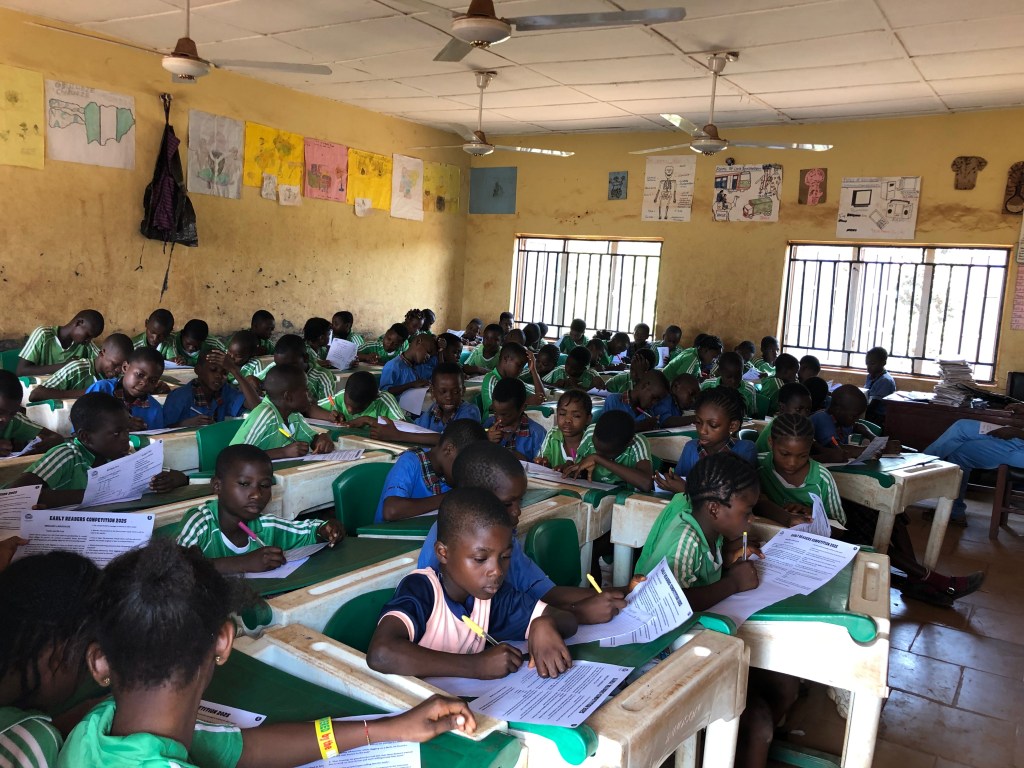
Nigeria’s education crisis is no longer only about funding, infrastructure, teachers or curriculum. It is now also about survival. Nigeria cannot claim to be fighting illiteracy while children and teachers are being hunted in schools.
The recent abduction and beheading of a school teacher in Oyo States is not just another tragic headline. It is a brutal reminder of a long-ignored crisis in education and the lack of decisive and effective measures to curb this problem from its root. Education in Nigeria is no longer safe.
In many parts of Nigeria today, classrooms have become targets for extremists and criminals, teachers have become victims and students have become bargaining chips in the hands of these people. The killing of Michael Oyedokun, has exposed once again how deeply insecurity has entered the educational system and has continued to grow and evolve with time.
This recent tragedy did not begin in Oyo. As far back as 2014, students were abducted for political and ideological reasons. Chibok in 2014 and Dapchi in 2018 fit this pattern. Boko-Haram, a terrorist group known for its opposition to western education kidnapped these children to further announce its course. From 2020 to 2026, this crisis seems to have become more commercialized. Armed gangs see schools as soft targets because children attract national attention and generate pressure for ransom negotiation.
In 2021, more than 90 students and staff of Federal Government College, Kebbi, were kidnapped and later released after months of captivity and negotiation with authorities. In November 2025, gunmen attacked St. Mary’s Catholic School in Papiri, Niger State, abducting close to 300 students and 12 teachers. After negotiations, authorities later announced that they had been freed.
We must ask these questions: Why did it happen at all, why is it recurrent, and what is the government doing to make sure that such a tragedy never occurs again? Government promises are no longer enough, another family should not be grieving over their loved ones who should be in school, and children should not learn that going to school could cost them their lives.
Why should teachers and students continue to risk their lives for education when the government has failed to guarantee their safety?
Nigeria already has one of the world’s worst out-of-school children crises. UNICEF estimates that one in every five out-of-school children in the world is in Nigeria, with about 10.5 million children aged 5 to 14 not in school. Insecurity will only make this worse! UNICEF also reported that in the last decade, more than 1,680 children were abducted in conflict-related violence at school and elsewhere, with school staff also kidnapped and killed.
It has become extremely crucial that state and federal governments go beyond condemnation. Nigeria needs prevention, intelligence, secure school environments, prosecution of sponsors and kidnappers, and a clear national strategy that makes schools untouchable. Until then, every school bell in an unsafe community will sound less like a call to learning and more like a warning.


Leave a Reply