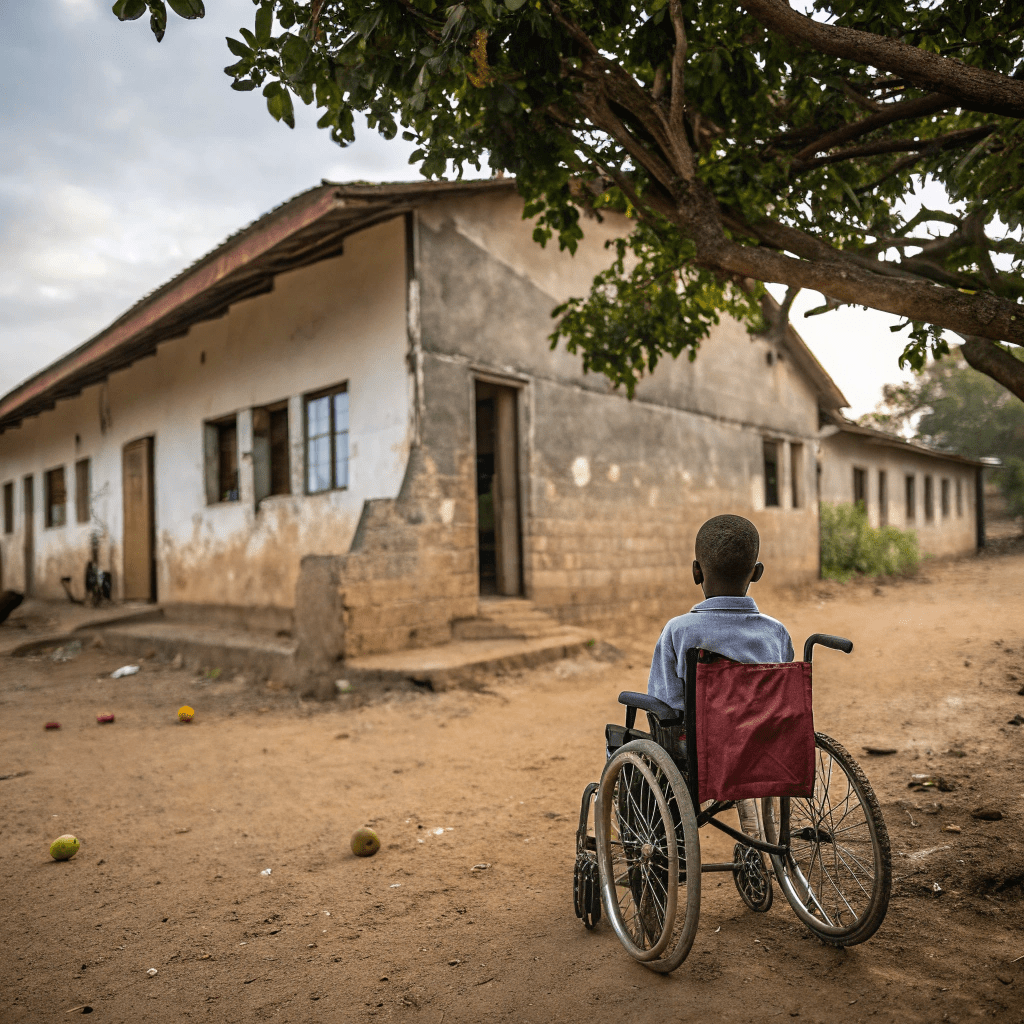
Despite legislative frameworks that are intended to guarantee educational access to every child, a significant number of Nigerian children living with disabilities are still excluded from basic educational opportunities. The current educational system and structure in place still perpetuates marginalization. The lack of proactive and sustained implementation strategies further deepens these disparities, and makes inclusive education elusive, especially to children in grassroot communities.
It is critical to move beyond policies on paper and address the infrastructural deficit, inadequate teachers’ training, societal misconceptions about children with disability, and poor enforcement mechanisms that are hindering the realization of inclusive education in Nigeria’s Basic Education.
LEGAL FRAMEWORK & INCLUSIVITY OF UNIVERSAL BASIC EDUCATION.
The Nigerian Government introduced the Universal Basic Education Act in 2004, which mandated free and compulsory primary and junior secondary education for every Nigerian child. This Act clearly recognizes the need for inclusive education and aligns with Nigeria’s broader educational goals outlined in the National Policy on Education. One of such goals is to provide equal access to quality education for all citizens at every level of education.
To further reinforce these commitments, Nigeria enacted the Discrimination Against Persons with Disability (Prohibition) Act in 2019. This Act explicitly prohibits discrimination against people with disabilities and mandates accessibility in educational institutions. It also calls for significant structural adjustments, such as accessible buildings and inclusive learning materials, which ensure that schools accommodate students with different forms of disability.
Building on these frameworks, the National Policy on Inclusive Education was formally approved in 2023 to operationalize inclusive education across Nigeria. This policy is guided by the principle of equity, inclusion, and the right to quality education for all. It seeks to eliminate barriers within the educational system and structure, and encourage more participation of children within mainstream education.
While the above legal frameworks aim to guarantee inclusive education, their practical implementation faces significant challenges.
TWO PRIMARY ISSUES THAT UNDERMINE THE EFFECTIVENESS OF THESE POLICIES.
1. INSUFFICIENT FUNDING
Despite the enactment of the Universal Basic Education (UBE) Act of 2004 and the Discrimination Against Persons with Disabilities (Prohibition) Act of 2018, inadequate financial resources continue to hinder their effective implementation. Nigeria’s budgetary allocations to education have consistently fallen below the international benchmark. For instance, only 4.9% of the national budget was allocated to Education in 2023, a figure way below UNESCO’s recommended 15-20% of public expenditure on education (Invinctus Africa).
This chronic underfunding disproportionately affects education in grassroot communities, where resources are already scarce. Without adequate funding, initiatives aimed at inclusive education will continue to struggle to take root, and many children living with disabilities will have limited access to quality basic education.
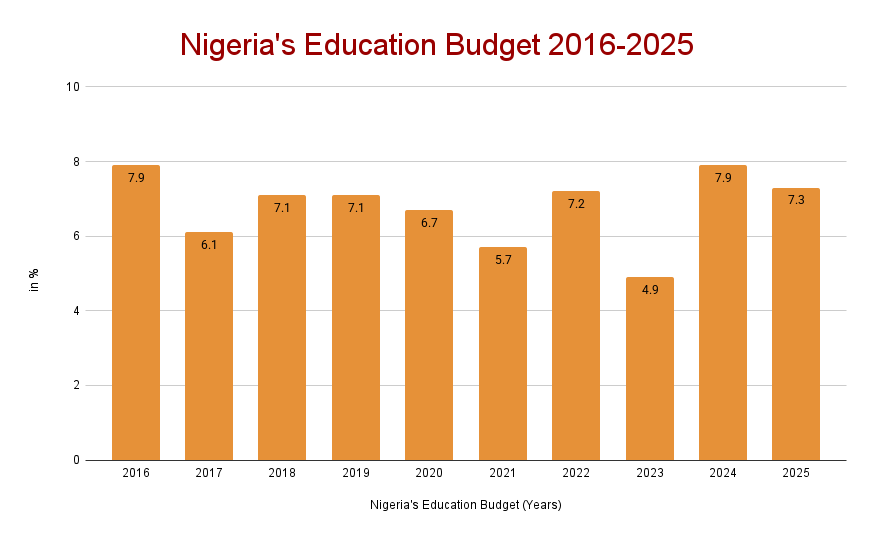
Source: Budgit
2. LACK OF ENFORCEMENT
The Discrimination Against Persons with Disabilities (Prohibition) Act mandates equal access to education for persons with disabilities; however, its implementation remains significantly limited. Although the Act applies federally, each state is required to domesticate it into state laws for full compliance locally. As of 2024, 23 out of 36 states have domesticated this act (Joint National Association of Persons with Disability, 2025). Many states have yet to domesticate this important legislation, which significantly weakens its impact at the grassroot level where the majority of schools operate.
Furthermore, the National Policy on Inclusive Education, approved in 2023, explicitly emphasizes the importance of integrating learners with disability into mainstream schools. This requires states and educational bodies to admit all learners and allocate sufficient resources to ensure successful integration. However, federal directives often encounter implementation gaps at the state and local level due to the autonomous rights. Hence, issues such as inconsistent implementation, lack of accountability frameworks, and insufficient monitoring mechanisms continue to limit the practical realization of inclusive education in Nigeria.
SCHOOL-BASED CHALLENGES OF INCLUSIVE BASIC EDUCATION.
1. Lack of Understanding of Disability and Spectrums
One main barrier to inclusive education in many schools is the limited understanding of the diverse types and spectrums of disabilities. Many educational stakeholders – educators, policymakers, and parents (usually those without children living with disability) – tend to generalize disabilities, failing to recognize the unique needs of each child. In a study by Okechukwu & co (2023), roughly 76% of primary teachers in the survey lack acceptable awareness about dyslexia, for example. There is that widespread assumption that all children living with disabilities should attend a special needs school, which is wrong. The gap in knowledge leads to inadequate support for students with disabilities because they are often lumped together and overlooked.
2. Limited Teacher’s Training
The shortage of adequately trained teachers is a critical issue. Many educators lack the necessary skills and knowledge to teach students with disabilities effectively. For example, in a study by Angwaomaodoko (2023), 74% of teachers in the survey had never heard of the term ‘inclusive education’. This deficiency stems from the absence of specialized training programs in teachers’ education curricula. As a result, teachers are ill-prepared to implement inclusive teaching strategies, which will ultimately hamper the learning experience of students with special needs.
3. Infrastructural Deficits
- Physical Accessibility:
Many schools, especially in grassroot communities, have challenging environments that hinder accessibility for students with physical disabilities. Rugged terrains, uneven surfaces, and high pavements are too common in these schools and require careful maneuvering from even able-bodied individuals, let alone students with disabilities who require mobility aids. Additionally, narrow classrooms, elevated steps, and cramped, unsanitary toilets are restrictive for students with disabilities. These infrastructural inadequacies profoundly limit access and engagement in educational activities, hence, reinforcing the exclusion these students feel.
- Learning Materials
There is a scarcity of specialized learning material, including braille books, sign language interpreters, and assistive technologies that are crucial for students with visual, hearing, or other impairments.
- Overcrowded Classrooms
Nigeria’s educational system grapples with an alarmingly high student-to-teacher ratio, far higher than international recommendations. While UNESCO advocates for a maximum of 40 students per teacher in primary education, many schools, especially public schools have a ratio of 100:1. For instance, in a 2021 report, it wa noted that states like Sokoto, Jigawa, Kano, Katsina, and Kaduna had an average pupil-to-teacher ratio of 98:1 with poorer schools reaching 150:1 actionaid.org. Such overcrowding severely limits teachers’ capacity to provide individualized support, which is the cornerstone of inclusive education.
4. Cultural misconception
Cultural misconceptions about disabilities significantly impede inclusive education efforts. In various Nigerian communities, disabilities are often attributed to supernatural causes or viewed as curses, which bring about stigmatization and discrimination of people living with disability. Such social attitudes discourage families from enrolling their children in schools, leading to more isolation of people living with disability.
WHAT CAN BE DONE BETTER TO ENHANCE INCLUSIVITY IN BASIC EDUCATION?
A proactive and multifaceted approach that addresses infrastructural, pedagogic, societal, and policy-related challenges is urgently needed in schools if the government truly intends to offer free basic education to all Nigerian children.
1. Infrastructural development
To promote inclusivity, schools must undergo infrastructural modifications to cater to all students. This involves constructing ramps, accessible toilets, and modifying classroom layouts to accommodate students with physical disabilities. The National Standard Operating Procedures on Inclusion and Access of Persons with Disabilities in Nigeria emphasizes the adoption of universal design principles to ensure accessibility in educational institutions.
2. Teacher Training and Capacity Building
Educators play a pivotal role in implementing inclusive education, and therefore, comprehensive programs that focus on inclusive teaching strategies and disability awareness are essential. Research shows that many teachers at the basic education level in Nigeria lack adequate training to support students with special needs.
3. Community engagement
Community engagement is a vital yet overlooked component of advancing inclusive education in Nigeria. While policies and institutional reforms are essential, lasting change depends on shifting perspectives and fostering inclusion at the grassroot level. Engaging community leaders, parents, and local influencers can play a transformative role in dismantling harmful cultural stigmas associated with disability and hence promote educational access for all children. Parents with children living with disability will no longer hide their children for fear and shame and will be more confident enrolling them in school because they know the community will also look out for their children. People will no longer assume that all persons living with disability should be separated from mainstream schools.
Adopting a bottom-up approach is especially crucial in Nigeria, where many families rely on community networks for decision-making. Encouraging communities to recognize, support, and actively include persons with disabilities fosters widespread empathy and shared responsibility. It also enhances the accuracy and coverage of national data collection efforts by helping identify out-of-school children with disabilities, many of whom are otherwise invisible in official records.
4. Resource Allocation
The actualization of the UBE and the Discrimination Against Persons with Disabilities (Prohibition) Act depends on adequate and targeted funding. The absence of a dedicated budget for inclusive education and specific allocations for learners with disabilities undermines the effectiveness of these policies. The government needs to go a step further and ensure that funds are specifically earmarked for the development of an accessible learning environment, procurement of assistive devices, and training of educators in inclusive teaching methodologies.
5. Data Collection and Research
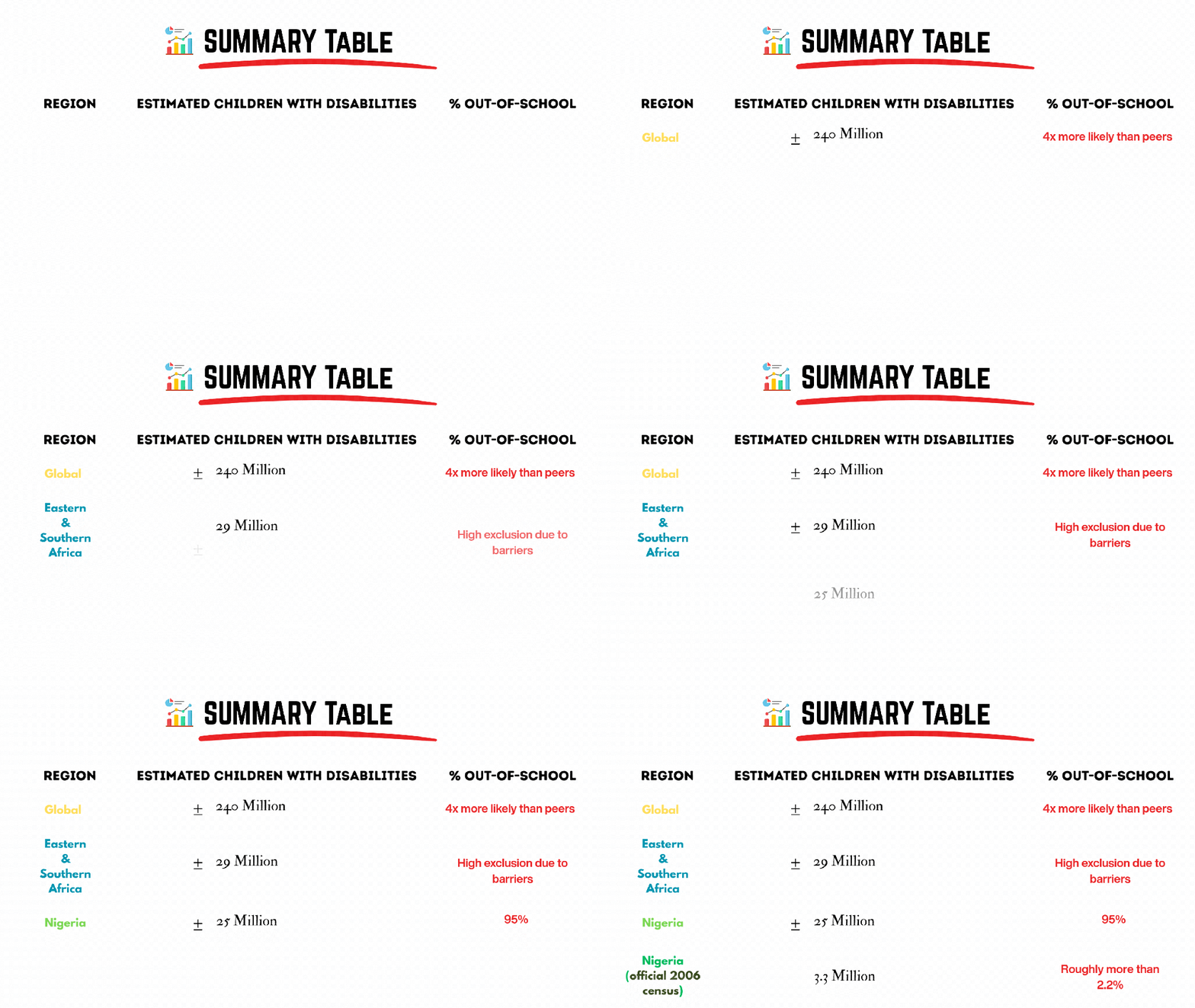
In Nigeria, a significant barrier to inclusivity is the lack of reliable data on the number and needs of children living with disability in Nigeria, particularly at the state and local government level. A 2021 research summary by ActionAid highlighted the absence of credible official figures on children with disabilities in Nigeria, which makes it more difficult to assess the full scope of the issue and plan effectively for inclusive education initiatives. Without accurate data, children with disabilities risk being marginalized and their needs unmet when educational planning and budgeting is being done.
REFERENCES
ActionAid. (2021). The Bedrock of Inclusion: Why investing in the education workforce is critical to the delivery of SDG4 – Summary report. https://actionaid.org/sites/default/files/publications/Nigeria%20study_summary%20report.pdf
Angwaomaodoko, E. A. (2023). The Challenges and Opportunities of Inclusive Education in Nigeria. Path of Science, 9(7), 1001-1009. https://doi.org/10.22178/pos.94-1
Inclusive Futures. (2025, February). Inclusive education in Nigeria: Findings from the SMILE project. https://inclusivefutures.org/wp-content/uploads/2025/02/SMILE_Inclusive-education-in-Nigeria_Feb25.pdf
Okechukwu, F.O., Mefoh, P.C., Nubia, U.I., Nwauzoije, E.J., Umennuihe, C.L. & Nwobi, C.A. et al., 2023, ‘Development and validation of a teacher awareness questionnaire about dyslexia’, South African Journal of Childhood Education 13(1), a1228. https://doi.org/10.4102/sajce.v13i1.1228
 GLORY IFEZUE FOUNDATION FOR WOMEN AND YOUTH INITIATIVE
Leave a comment