In just three years, the Early Readers Programme has planted more than just books in the hands of children; it has planted vision, purpose, and pride. And that is why it exists.
The Vision Behind the Early Readers Competition
Believe it or not, the Early Readers Competition – an organ of our Early Readers Program – began as what we jokingly call an “oops pregnancy,” unexpected, yet now one of the most beautiful and impactful journeys we have embarked on since 2023. In 2025, we proudly marked its third anniversary, celebrating not just the passage of time, but also the transformation of a simple idea into a growing literacy movement.
This competition has been a deliberate effort to nurture curiosity and cultivate a love for learning in school-going children. Think of it as fertilizing young plants or enriching the soil so they can grow strong, bright, and purposeful, ultimately contributing to the rebuilding of our nation.
Although the name may suggest a spelling bee or a stand-up reading competition, it is neither. Instead, this initiative is deeply rooted in recognising and rewarding children who are already engaging with books and schoolwork; using them as examples to inspire others. Through this approach, we are quietly but powerfully cultivating a culture of intentional learners within our grassroots communities, where literacy becomes a key to unlocking future possibilities.
Here is what we aim to teach through the Early Readers Competition:
1. Active Learning as a Pathway to Brilliance:
Intelligence is not just innate, it is cultivated. We aim to show them that brilliance comes from feeding curiosity, actively engaging with school materials, and developing the habit of independent reading. Many children are taught in school, but only a few take ownership of their learning. This competition sparks that ownership. It awakens in them the understanding that what they read, reflect on, and apply is what makes the difference.
2. Recognising and Seizing Opportunities
Opportunities comes in different forms. One core lesson we aim to instill is that opportunities are not just for adults or certain class of people. They do not always favor age or experience; they favor the prepared. Many children, especially in grassroot communities, need to be loudly reminded that preparation creates access. When they witness the rewards given in this competition, not by luck, but by readiness; they begin to understand that participation, preparation, and perseverance are the keys to growth. They learn that when the next opportunity comes, they must be ready to rise to the occasion.
Why the 2025 Early Readers Competition Happened in February Instead of January
January has always held symbolic weight for the Early Readers Program. It aligns with the International Day of Education, a United Nations-recognised event that reaffirms our commitment to investing in grassroots learning. It was also set in our calendar as the official month for the Early Readers Competition. However, despite our early preparations, the event was eventually moved to February; and not because of poor planning, but because of an unexpected but vital learning experience.
At the end 2024, we had a renewed goal which was to extend the competition beyond private schools and into public primary schools across Enugu State. This step required us to engage with government structures and obtain formal permission, something we had not fully anticipated at the outset.
During our initial school visits, it was the insight and support of several headteachers that pointed us in the right direction. They embraced the idea but informed us that if public schools were to participate, we needed approval from the Enugu State Universal Basic Education Board (ENSUBEB).
Navigating the process of gaining approval was not easy. It involved several rounds of communication, repeated visits, document submissions, and long waits. In fact, the approval process spanned over three weeks, and at several points, our team began to question whether the competition would hold at all.
As time slipped away and January drew to a close, we wrestled with the possibility of either scaling down the competition or postponing it entirely. But just as we reached the point of discouragement, we received the official green light. It was nothing short of a miracle, and we remain deeply grateful to ENSUBEB for their thoroughness, diligence, and eventual support.
The 2025 Early Readers Competition may have missed its January date, but it gained something greater. We had wider reach, richer inclusion, and a renewed appreciation for the systems that make equitable education possible.
How Many Schools Joined the 2025 Early Readers Competition
Our numbers may still seem modest on paper, but they tell a story of consistent growth, increasing trust, and expanding impact.
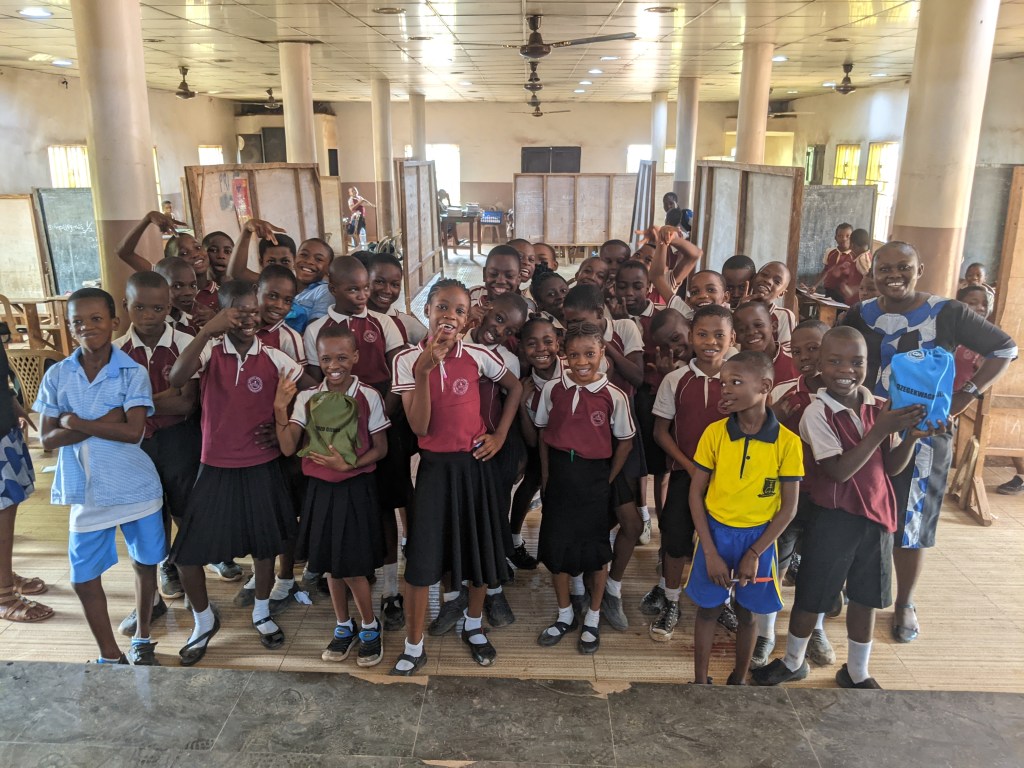
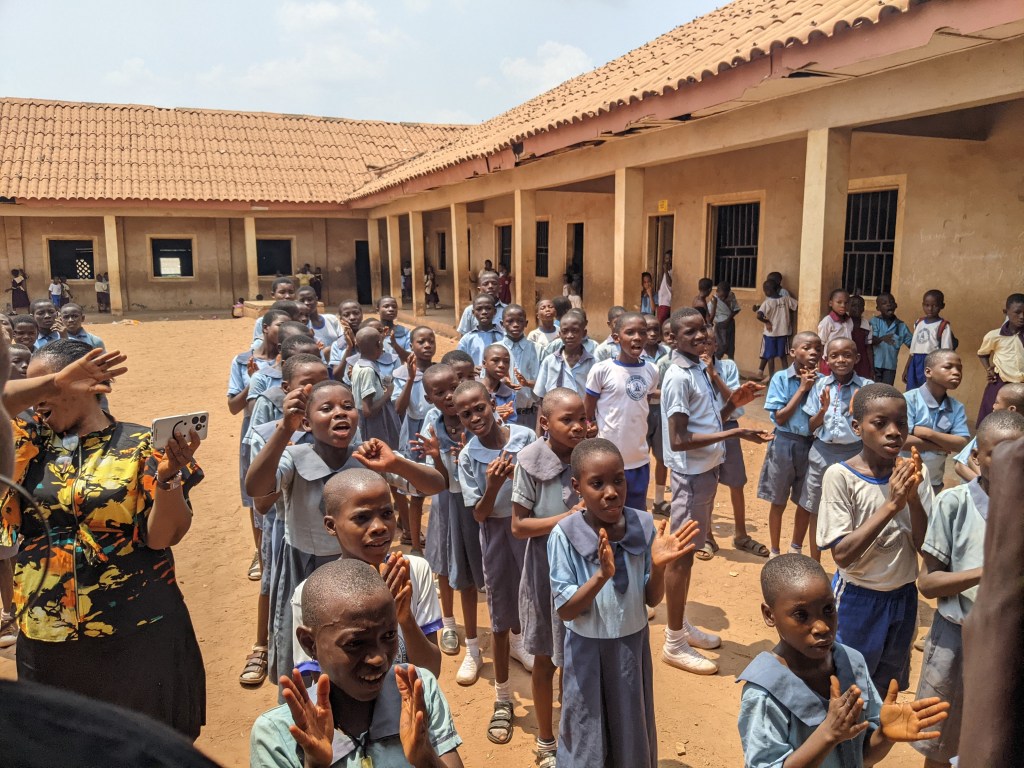
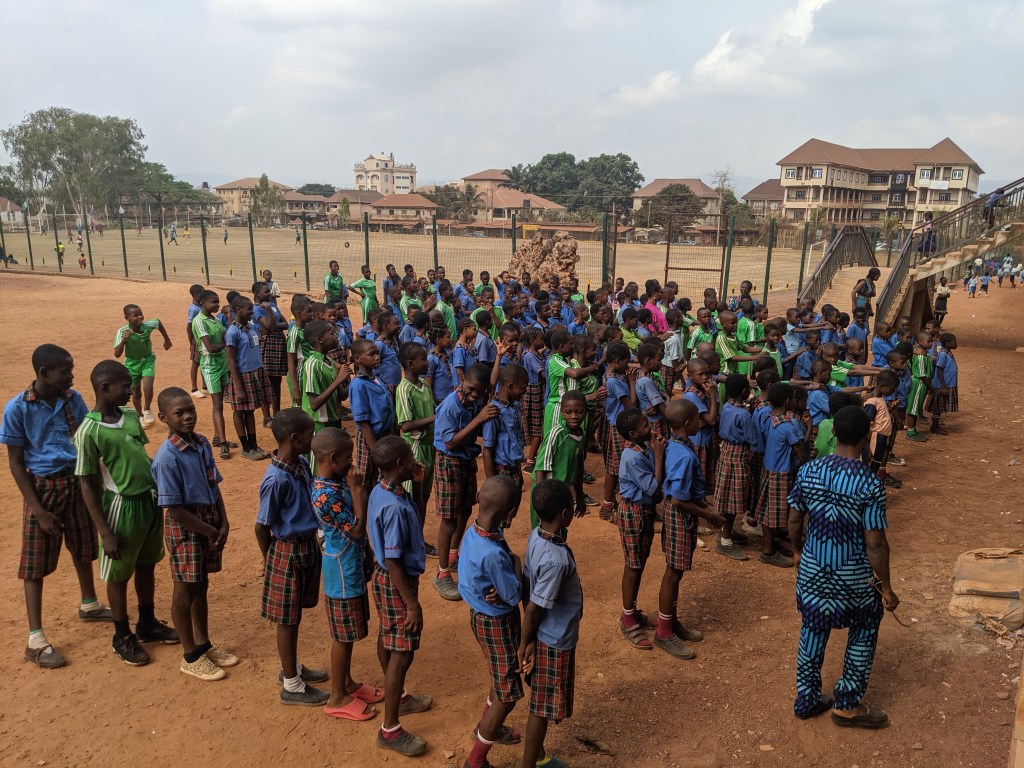
In 2025, we proudly welcomed six primary schools into the Early Readers Competition – our highest participation yet. In 2023, we began with just one school. In 2024, that number grew to four. Now, in our third year, six schools have come on board, a 50% increase from the previous year.
Continue Reading
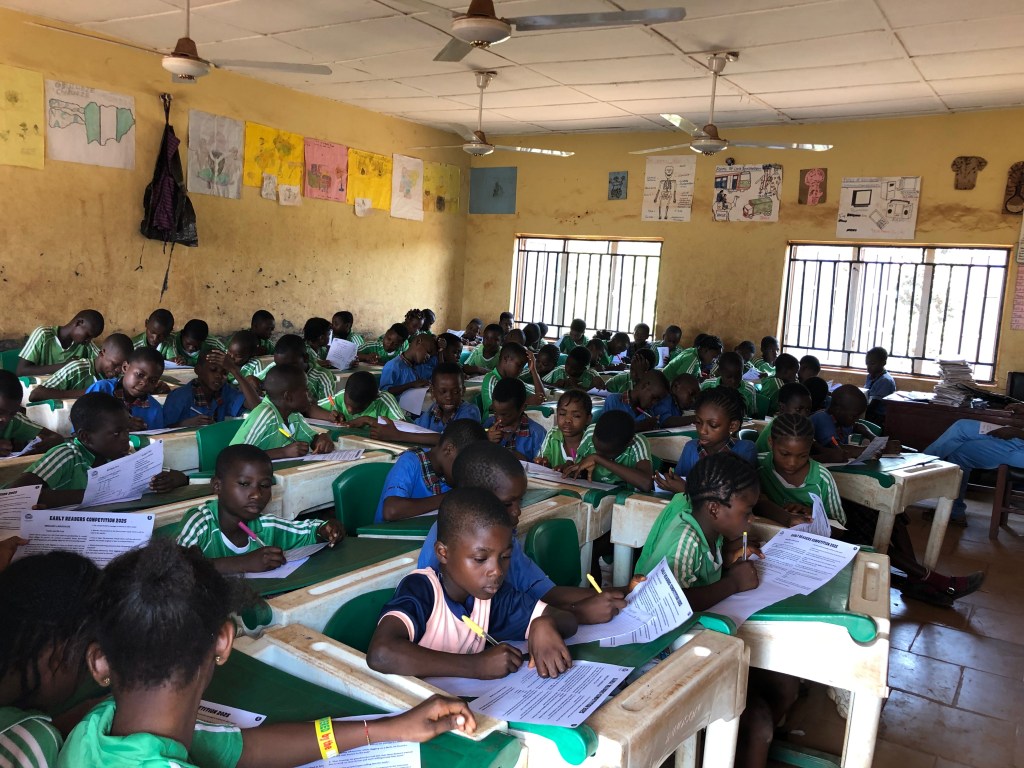
This year’s competition was opened to every Primary 5 and Primary 6 pupils in the participating schools, because we wanted to prioritize learners who are transitioning into more advanced reading stages. Across the six participating schools, we had a total of 383 students.
This growth matters to us. It signals not only broader participation, but deeper trust from schools and communities. And while the journey ahead is still long, we are immensely proud of this upward trend. Grassroots change often starts small but grows strong with time, effort, and vision. We hope it remains so with this competition.
How We Selected Our Champions.
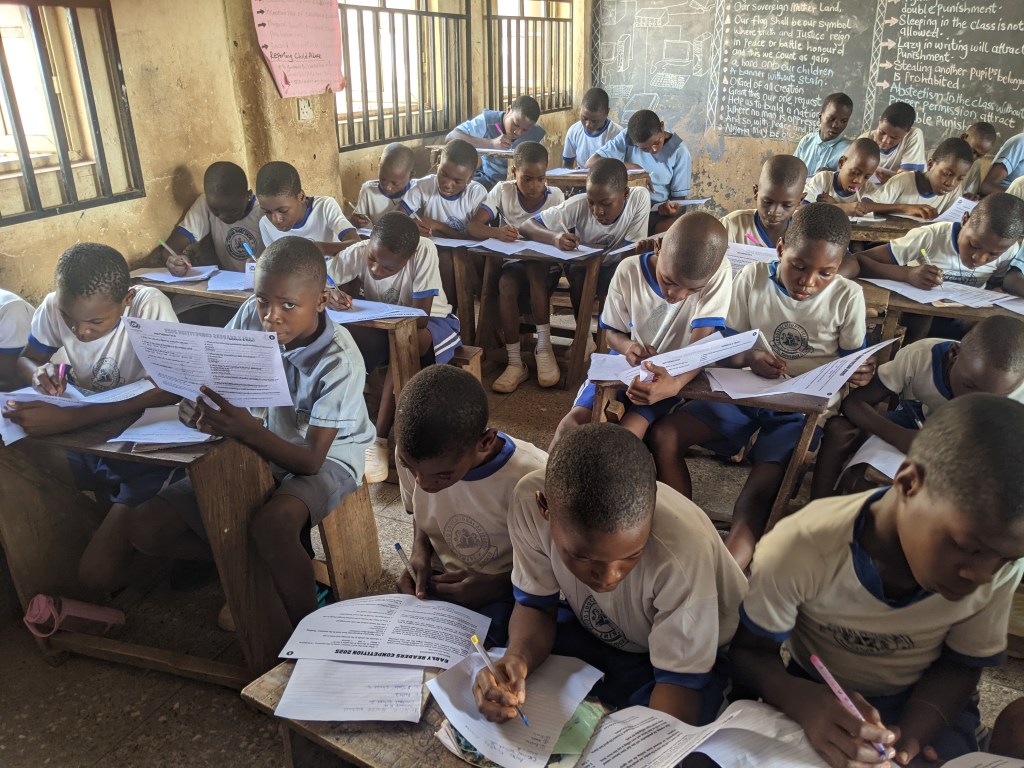
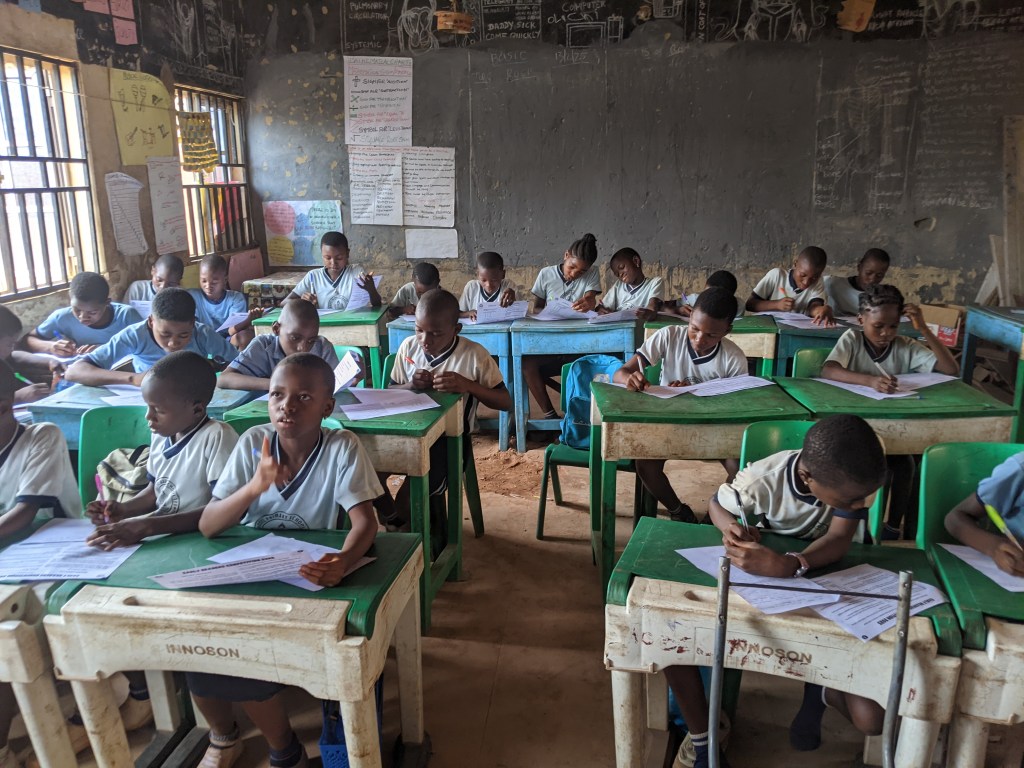
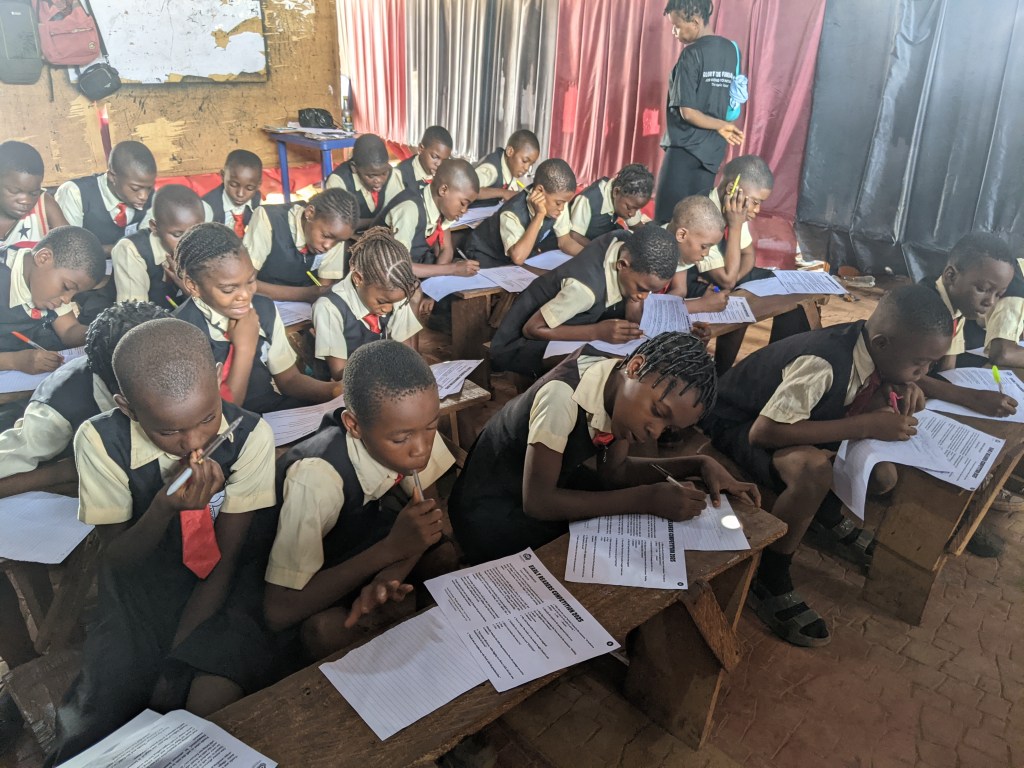
This year’s Early Readers Competition was a carefully designed academic challenge meant to reward curiosity, comprehension, and critical thinking. To ensure fairness and relevance, two separate exam papers were curated: one for Primary 5 and another for Primary 6 pupils. This ensured age-appropriate standards across core subjects: English Language, Mathematics, and integrated science.
Keep Reading
The competition evaluated:
- Reading comprehension and vocabulary (e.g., identifying similes, figurative language, and contextual meanings)
- Basic grammar and phonics (e.g., sentence voice, vowel recognition, and sound differentiation)
- Scientific awareness (e.g., health, basic computer literacy, and environmental responsibility)
- Numeracy skills (e.g., place value, fractions, & equations)
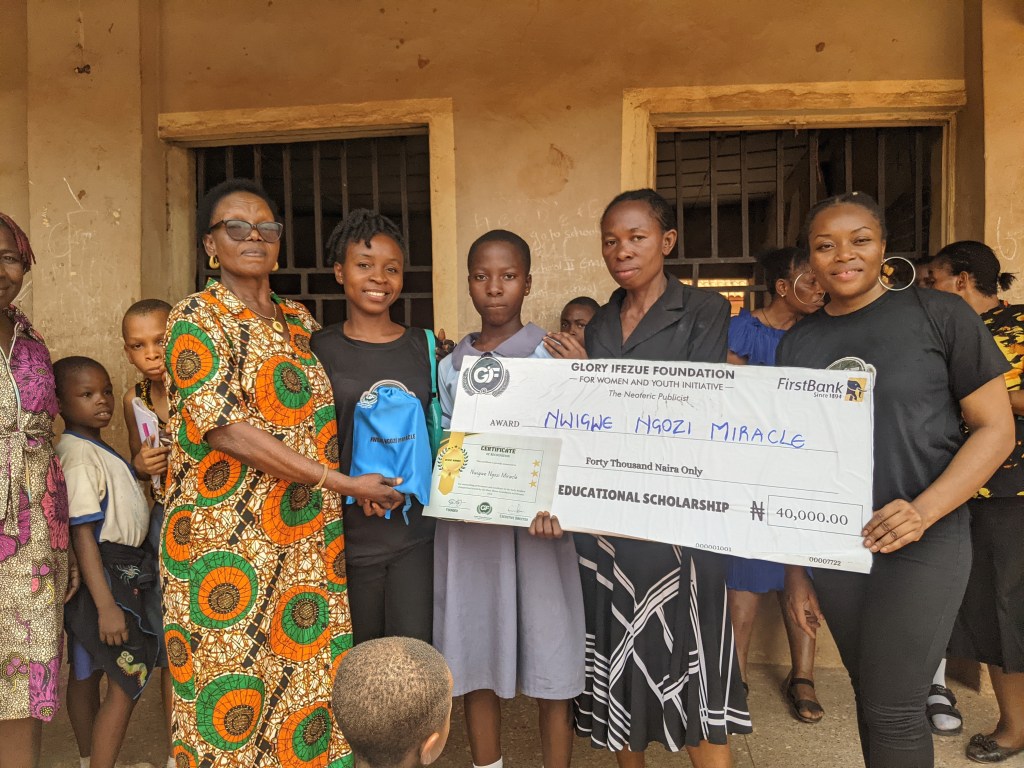
Once papers were marked, 20 winners were selected and were grouped three categories:
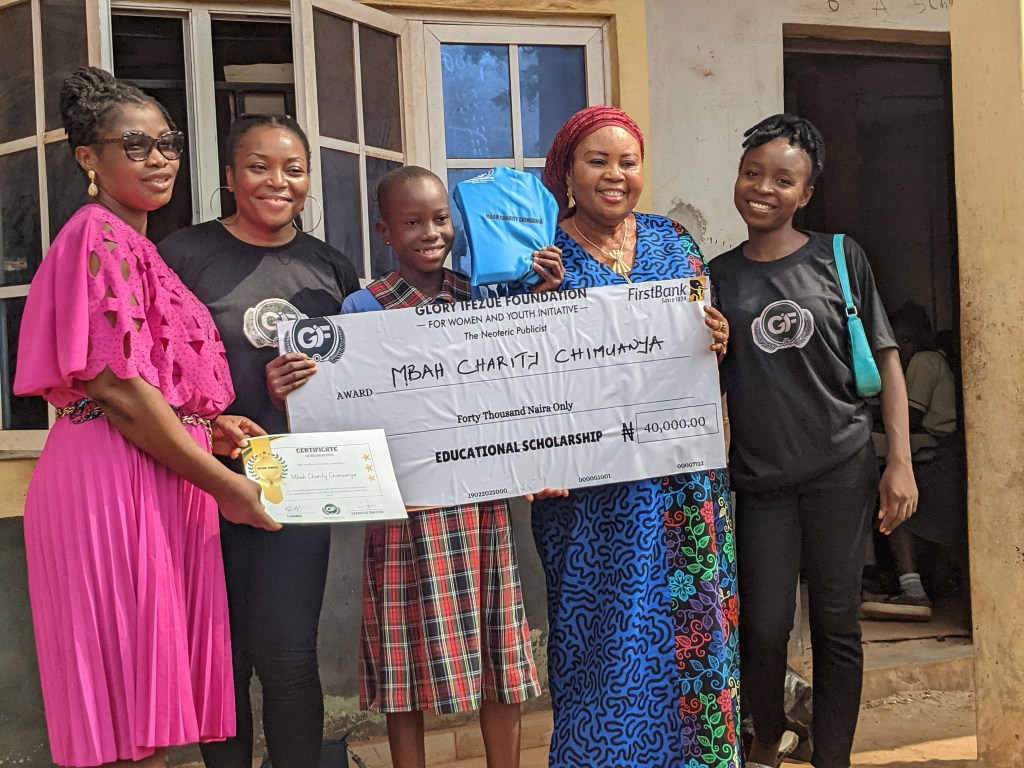
- Grand Winners – Pupils who scored 20 marks and above out of 30.
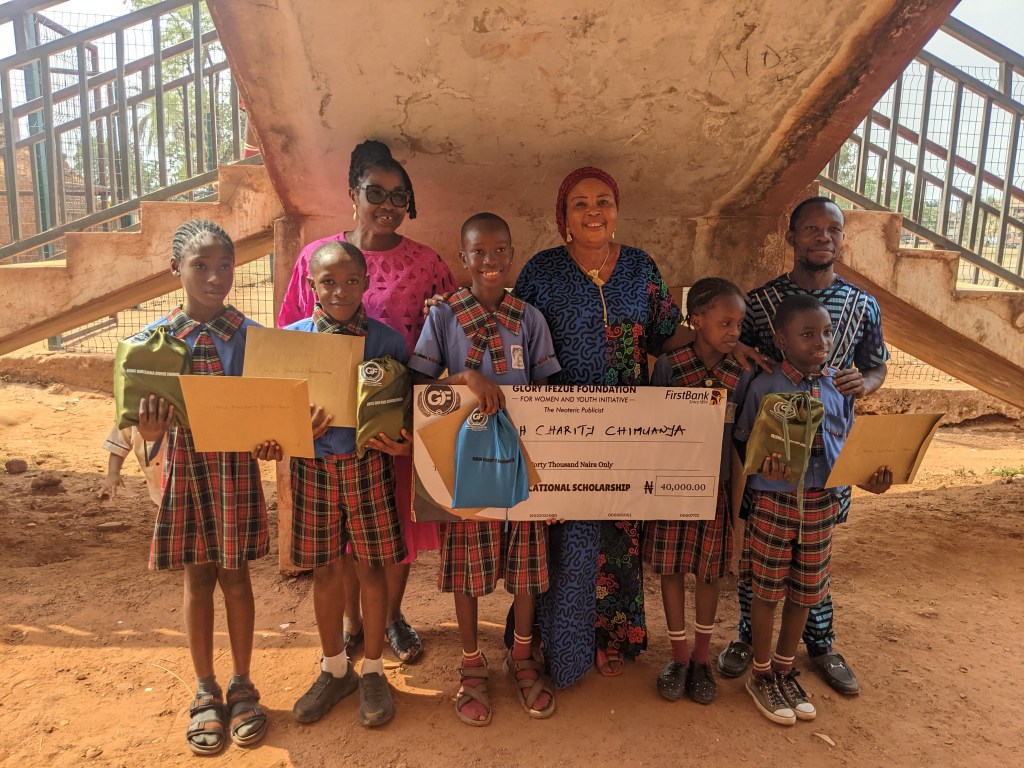
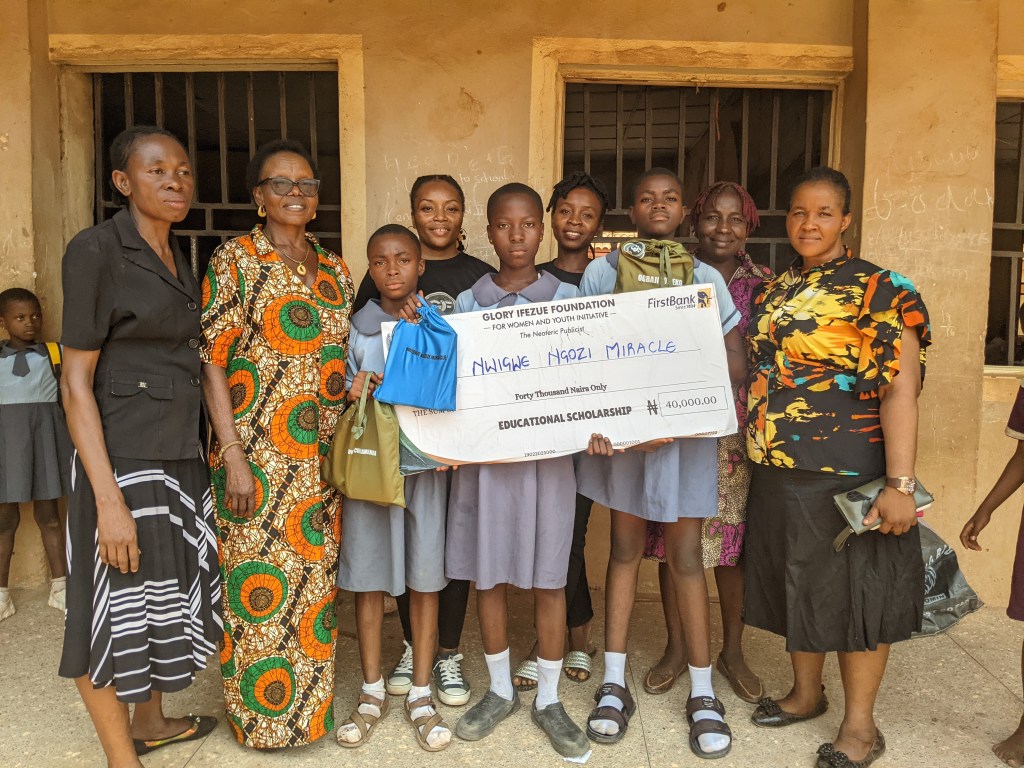
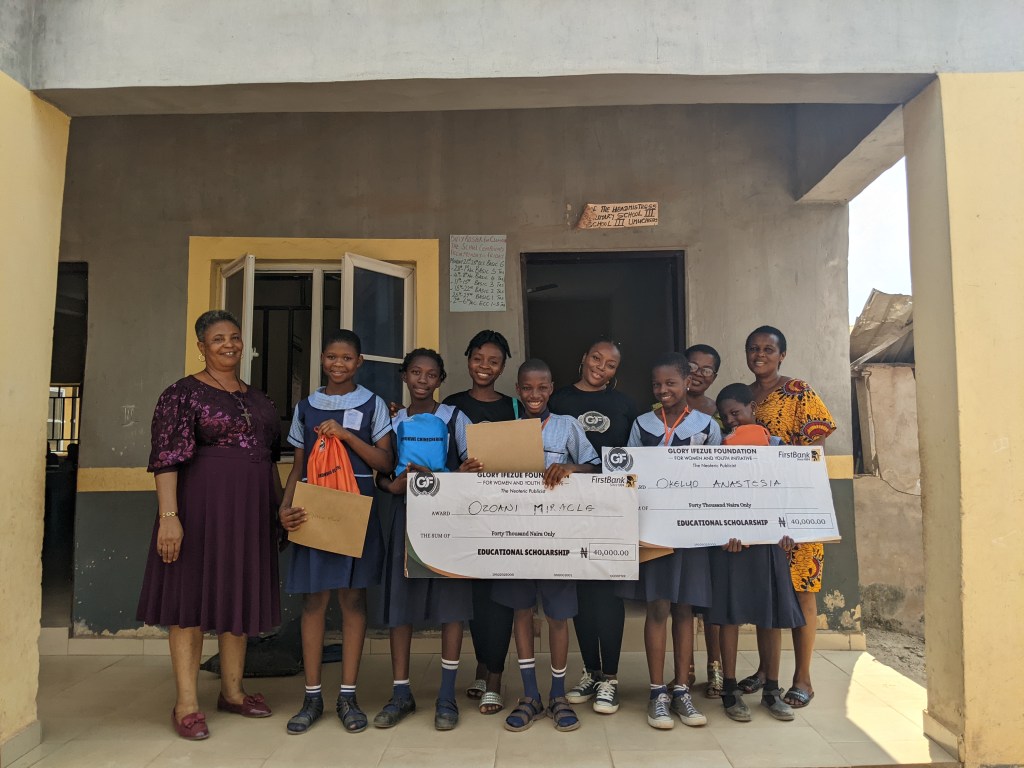
- Received: Certificate of recognition, ₦40,000 scholarship fund each, a customised pouch, branded notebook (Glory Ifezue Foundation), math set, and assorted goodies.
- Second-Level Winners – Scored 17 marks and above.
- Received: Certificate of recognition, customised pouch, customised notebooks, math set, and goodies.
- Third-Level Winners – Recognised for strong effort and participation.
- Received: customised Pouch, customised notebooks, math set, and goodies.

Surprising Insights from Student Performances.
This year’s Early Readers Competition was no walk in the park, and that is exactly why we celebrate every participant with pride. We are thrilled that a significant portion of the pupils scored within the average range. But as we reviewed the results, something stood out.
One of the most striking insights from this year’s competition was the clear performance gap between pupils in public and private schools, but not in the direction most would expect. Public school pupils outperformed their private school counterparts, and every single grand winner emerged from a public school.
This was not what we had predicted going in. Like many, we anticipated stronger outcomes from private schools, or at least, a 50/50 prize-split between the two groups of learners.
Another noticeable trend was the performance gap between classes. Primary 6 pupils far outperformed Primary 5 pupils. In fact, the disparity was so wide, it almost felt like pupils in Primary 5 were spectators rather than contenders. This outcome highlighted developmental differences in comprehension maturity, possibly coupled with exam readiness, exposure levels, and paper difficulty.
These results are more than numbers; they are windows into educational dynamics in grassroots communities.
What More Can Be Done for Learners in Grassroots Communities?
Supervising the 2025 Early Readers Competition provided insight into the realities our young learners face.
- The Reading Challenge is Real
Many pupils struggled with reading their comprehension passages, not because they lacked intelligence, but because they had not yet developed strong reading fluency. This made it difficult for them to understand the questions, much less answer accurately.
To address this, more exposure to reading activities is needed both in school and at home. We believe it is time for parents, teachers, and caregivers to leverage technology. Many free and affordable platforms offer engaging reading support and foundational skill development. (Keep an eye out: we will soon be spotlighting some of these digital tools in a dedicated post.)
More than resources, though, we need to reignite a culture of reading, where books are seen not as academic burdens but as adventures, friends, and keys to success. - Time Management Is A Silent Barrier
A large number of pupils were unable to complete their papers not for lack of knowledge, but because of poor time management. They spent too long on individual questions and could not pace themselves through the entire paper.
To fix this, we recommend regular exposure to timed practice sessions in both classrooms and home settings. Children need to be taught not just what to think, but how to manage their thinking within a set timeframe, which is a skill that will serve them in all areas of life. - Memorization Without Understanding
Another revealing observation was the gap between knowing definitions and applying knowledge. Many pupils could define “noun” perfectly, for example, but were unable to identify one in a passage.
This highlights a deeper issue: rote learning is still dominant, while critical thinking and concept application remain weak. As educators, we must now ask: How can we move learners from surface knowledge to deep understanding? How can we teach concepts in a way that they stick, and make sense in real-life contexts?

Rounding Up
The Early Readers Program is not just here to run competitions. It is here to learn, adapt, and lead. What we saw this year will shape how we engage schools, and parents, and design content going forward for more effective empowerment activities.
Learn more about each school that participated in the competition
 GLORY IFEZUE FOUNDATION FOR WOMEN AND YOUTH INITIATIVE
Leave a comment