

Bullying is a pervasive issue in Nigerian schools that affect countless students in both public and private institutions. Many endure physical assault, public humiliation, and the confiscation of personal belongings by their peers, and in some cases, even by teachers—with little recourse to justice. These harrowing experiences are often shared informally through conversations with family and friends rather than being addressed through official channels. Occasionally, videos of such incidents surface online, triggering public outrage. However, justice is not always served, particularly when perpetrators come from affluent or influential backgrounds capable of manipulating outcomes. In some tragic instances, victims do not survive, as documented by reports in 21st Century Chronicle.
While bullying is a global phenomenon, its prevalence in Nigerian schools raises critical questions about its roots. Schools often reflect the societies in which they exist, acting as microcosms where external norms and values shape internal behaviors. In Nigeria, where societal structures are deeply influenced by power dynamics, hierarchical respect, and communal expectations, these factors may significantly impact student interactions.
It is important we ask this compelling question: Is bullying in Nigerian schools a reflection of broader societal norms and values? It is important to examine how cultural expectations, societal challenges, and institutional practices can contribute to bullying.
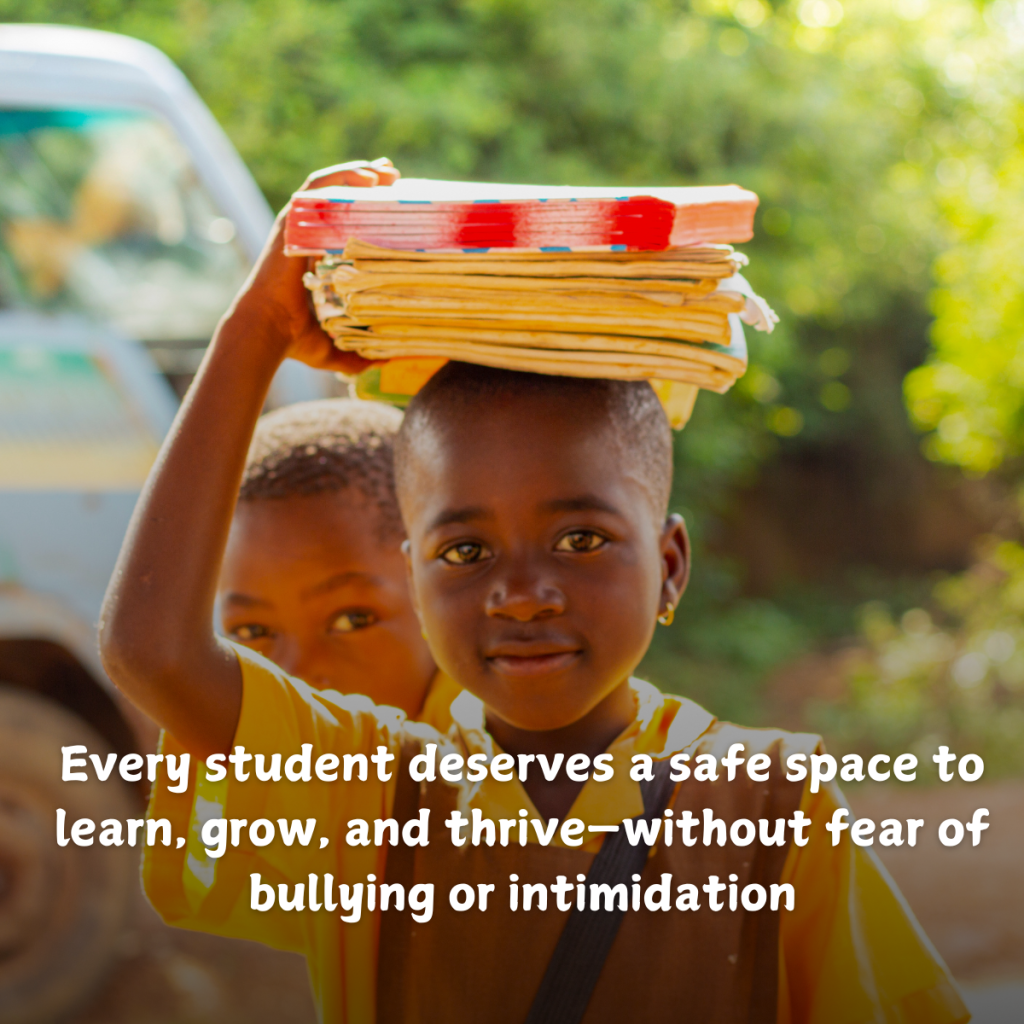
Understanding Bullying in Nigerian Schools
Bullying in Nigerian schools manifests in three primary forms: physical, verbal, and psychological (or social) bullying. Physical bullying involves acts of direct physical harm, such as hitting, kicking, or damaging belongings. Verbal bullying includes behaviors like teasing, insults, threats, and name-calling. Psychological or social bullying takes more subtle forms, such as spreading rumors, deliberate social exclusion, or other actions designed to isolate and emotionally harm the victim.
The Policy on Safety, Security and Violence-free Schools R2 in Nigeria defines bullying as any repetitive, intentional act of aggression, intimidation, or coercion that causes harm or distress to the victim. These acts are typically characterized by a power imbalance favoring the bully, whether through physical strength, social influence, or age advantage.
Although this policy empowers schools to create violence-free learning environments, administrative responses to bullying vary widely. Many schools lack comprehensive anti-bullying frameworks, resulting in inconsistent or reactionary measures. A stark example is the case of Don-Davis Archibong, an 11-year-old student at Deeper Life High School in Akwa Ibom. He reportedly endured severe bullying from senior classmates, leading his mother to launch an online campaign after her complaints to the school were initially overlooked. Investigations were delayed, and substantive action only followed public outcry. While the school partially acknowledged the incident and pledged further inquiry, whether justice was fully served remains unclear. This case highlights the systemic shortcomings in addressing bullying, particularly when victims lack external platforms or advocacy to hold schools accountable.
The prevalence of bullying in Nigerian schools is further compounded by underreporting and limited research. Nevertheless, available studies reveal an alarming trend. For example, Omoteso (2010) found that more than 80% of students in his study had experienced bullying R3. Ighaede-Edwards et al. (2023) reported that more than 50% of their surveyed student population had experienced bullying R1. Additionally, a study by Egbochuku (2007) in Benin City found that around 78% of surveyed students reported experiencing bullying at least once, with about 85% admitting they had bullied others.

Cultural and Societal Norms That Influence Bullying.
Nigerian society is deeply rooted in hierarchical respect for authority, age, wealth, and influence. Deference to those perceived as superior is expected, and questioning such figures often incurs punitive consequences. This hierarchy permeates various aspects of life, including families, communities, workplaces, and religious institutions. Elders, wealthy individuals, and influential figures are automatically accorded more respect and authority, even when their actions might not justify it. This system is not only based on respect but often veers into intimidation and coercion as tools to maintain the social order.
This dynamic is vividly depicted in Nigerian literature and drama. For example, in Chinua Achebe’s Things Fall Apart, Okonkwo chastises a man during a village meeting, emphasizing that his lack of wealth renders his opinions unworthy. Such narratives underscore the societal tendency to associate respect and influence with power and material status. This mindset is mirrored in Nigerian schools, where seniority or social standing often legitimizes dominance over others.
In school settings, these societal norms manifest as older, physically stronger, or more socially influential students exerting control over their peers. Bullying behaviors, such as intimidation or coercion, are sometimes rationalized as “discipline” or maintaining order. Junior students, expected to defer to their seniors, are often discouraged from resisting or reporting such acts, further entrenching power imbalances.

Beyond drama & literature, there are other instances from broader society that reinforce the role of hierarchal respect, intertwined with intimidation in maintaining control. The handling of the 2020 #EndSARS protests against police brutality provides a stark example. Soldiers were deployed to suppress peaceful protests, and incidents like the tragic Lekki Toll Gate shooting highlighted how state power can be wielded to silence dissent. Similarly, recent marches against bad governance have seen minors and civilians bundled and detained for speaking out—a clear indication of how societal power structures prioritize intimidation over dialogue (ThisDay). These events mirror the same dynamics of suppression and control seen within schools.
Boarding schools, in particular, are notorious for fostering a culture of hazing, where senior students impose demeaning or harsh tasks on juniors under the guise of enforcing respect. Such incidents have occasionally made headlines, R6, highlighting how accepted power structures can create environments conducive to bullying.
Teachers and school administrators sometimes unintentionally reinforce these dynamics. Punitive or authoritarian disciplinary measures such as flogging, public humiliation, and confiscation of belongings mirror societal practices of dominance through intimidation. These methods not only blur the lines between discipline and bullying but also teach students that coercion is a valid way to assert authority. Consequently, when senior students emulate these behaviors, younger students feel compelled to comply, perpetuating a culture where bullying becomes normalized as an extension of respect for authority.
Corporal punishment remains a prevalent disciplinary tool in Nigerian schools, reflecting broader societal acceptance of physical discipline as a means to instill obedience. Many parents, influenced by traditional values, advocate for similar practices at home. This cyclical approach fosters environments where dominance is asserted through fear rather than mutual respect, deeply influencing student interactions.
The Role of Media and Pop Culture
The Media and pop culture has become a huge part of the Nigerian society, influencing rhetorics and behaviors. Movies, music, and social media are powerful sources of inspiration for young people. However, these platforms can also encourage a harmful normalization of aggressive behaviors.
Afro-pop songs and Nollywood movies frequently feature themes that showcase dominance, revenge, or unchecked authority. While these themes are intended to entertain, they may unintentionally promote these actions as aspirational traits among youth. Celebrities in music and film often project an image of toughness and power, resonating with young audiences who may perceive these behaviors as pathways to social respect or fame.
Social media further amplifies these influences by promoting trends that sometimes encourage violent pranks or bullying as forms of “entertainment.” Viral videos of altercations among celebrities or content creators, where individuals engage in fights or verbal confrontations, can inadvertently incentivize similar behavior among young viewers. These trends are concerning, as they make students more likely to mimic these behaviors, reinforcing the idea that violence is an acceptable social practice.
Numerous studies have examined the influence of pop culture, social media, and violent media on behavior, particularly among young people, and many of these studies support the idea that individuals are more likely to adopt behaviors that are glamorized by the media R7. Some studies indicate that exposure to violent video games, for example, can lead children and adolescents to develop aggressive thought patterns and emotional responses, resulting in decreased empathy and an increased acceptance of aggression as normative (Anderson & Dill, 2000; Anderson, 2004).
This complex relationship between media influence and student behavior underscores the need for educators and parents to actively discuss these portrayals with young people, encouraging them to critically engage with and question the values presented in media and pop culture.

Bullying as a Reflection of Broader Social Issues.
Bullying in Nigerian schools mirrors broader societal challenges, including economic hardship, political instability, and cultural stressors. Economic struggles, for example, create a backdrop of frustration and competition that can manifest in schools as aggressive behaviors or dominance, often reflecting dynamics that children may experience in their homes. This phenomenon is evident in cases where students from economically disadvantaged backgrounds may bully others as a way of compensating for their lack of resources or feelings of insecurity. For instance, students who cannot afford personal items or school materials may target those who can, sometimes engaging in bullying as an attempt to “level” the social and economic playing field.
Studies have shown a correlation between economic instability and aggressive behavior or bullying in children and adolescents, as financial stress within the household can increase the likelihood of behavioral issues in school (Bellair et al., 2019; Elgar et al., 2009; Tinuke et al., 2023).
Political instability and power struggles at the national level can also influence school environments. Nigerian politics is often associated with hierarchical structures where individuals in power may use their positions to maintain control, sometimes through coercion or force. This normalization of using power for personal gain can be seen in school settings, where similar behaviors may be adopted. An example of this is the prevalence of “seniority” bullying in Nigerian boarding schools, where older students exert control over younger ones, reflecting broader societal power dynamics. For firsthand accounts, you can explore experiences shared by Nigerians online here.
Additionally, in communities where young people face limited opportunities for growth and are exposed to insecurity or violence, they may mirror this aggression within school settings. When society implicitly accepts certain aggressive behaviors as a form of self-defense or survival, young people may interpret bullying as a way to secure their place or establish dominance in their social circles.
Possible Solutions and the Role of Society in Addressing Bullying
Addressing bullying in Nigerian schools needs to go beyond punitive responses and instead focus on tackling both the behavior and its societal roots. Recognizing that school bullying often reflects broader social issues, solutions should aim to foster respect, empathy, and positive behaviors among students while also engaging parents, educators, policymakers, and community leaders.
It is time the government and schools administrators in general introduce empathy training and conflict resolution programs in schools. This program can help students understand the impact of their actions on others, and hence encourage them to respectful and positively interact with one another. This can be done through mindful and goal-oriented group activities among diverse groups of students. Also, schools should consider the election of student peace ambasedors that could be externally trained and monitored to ensure that certain activities and resolution are implemented in schools.
Parents also play a critical role in shaping children’s behavior and attitudes, so they should be involved in addressing school bullying. Through workshops and community sessions, schools could help parents understand the impact of bullying and encourage them to model respectful behavior at home. For example, many parents still endorse corporal punishment, which can reinforce aggressive tendencies in children. Some even encourage their children to confront those who challenge them at school. Educating parents on alternative discipline methods and strategies their children can use to handle conflicts can help create a supportive environment that discourages bullying.
Since media and pop culture heavily influence youth behavior, media campaigns featuring Nigerian celebrities and influencers could positively impact students’ attitudes toward bullying. For instance, campaigns such as the U.S.-based “#SeeHer” initiative work to improve media portrayals of women and girls, thereby shaping cultural norms about gender and power. In Nigeria, prominent figures like actors, musicians, or athletes could similarly advocate against bullying, promoting messages of respect and kindness.
Additionally, partnering with Nollywood filmmakers and popular influencers to create content that positively depicts friendship, kindness, and respect can counteract the glamorization of aggression and dominance. This shift in media portrayal can gradually change societal attitudes towards power dynamics and reduce the normalization of bullying.
Lastly, community and religious leaders hold significant influence in Nigerian society and can play an instrumental role in shifting cultural attitudes. Leaders in churches, mosques, and other community organizations could openly address the harms of bullying, encouraging respect and compassion as central values. Some churches have already launched youth empowerment programs that emphasize character-building, resilience, and mutual respect, which could be expanded to address bullying directly.
Conclusion
To truly curb bullying in Nigerian schools, it’s important we shift perspective as a society, by embracing values of empathy, respect, and accountability at all levels. A change in school culture could start with a shift in societal attitudes toward authority, discipline, and interpersonal respect. It is important we rethink disciplinary methods, amplify positive media representations, and foster environments where students feel safe and supported to discourage bullying
 GLORY IFEZUE FOUNDATION FOR WOMEN AND YOUTH INITIATIVE
Leave a comment