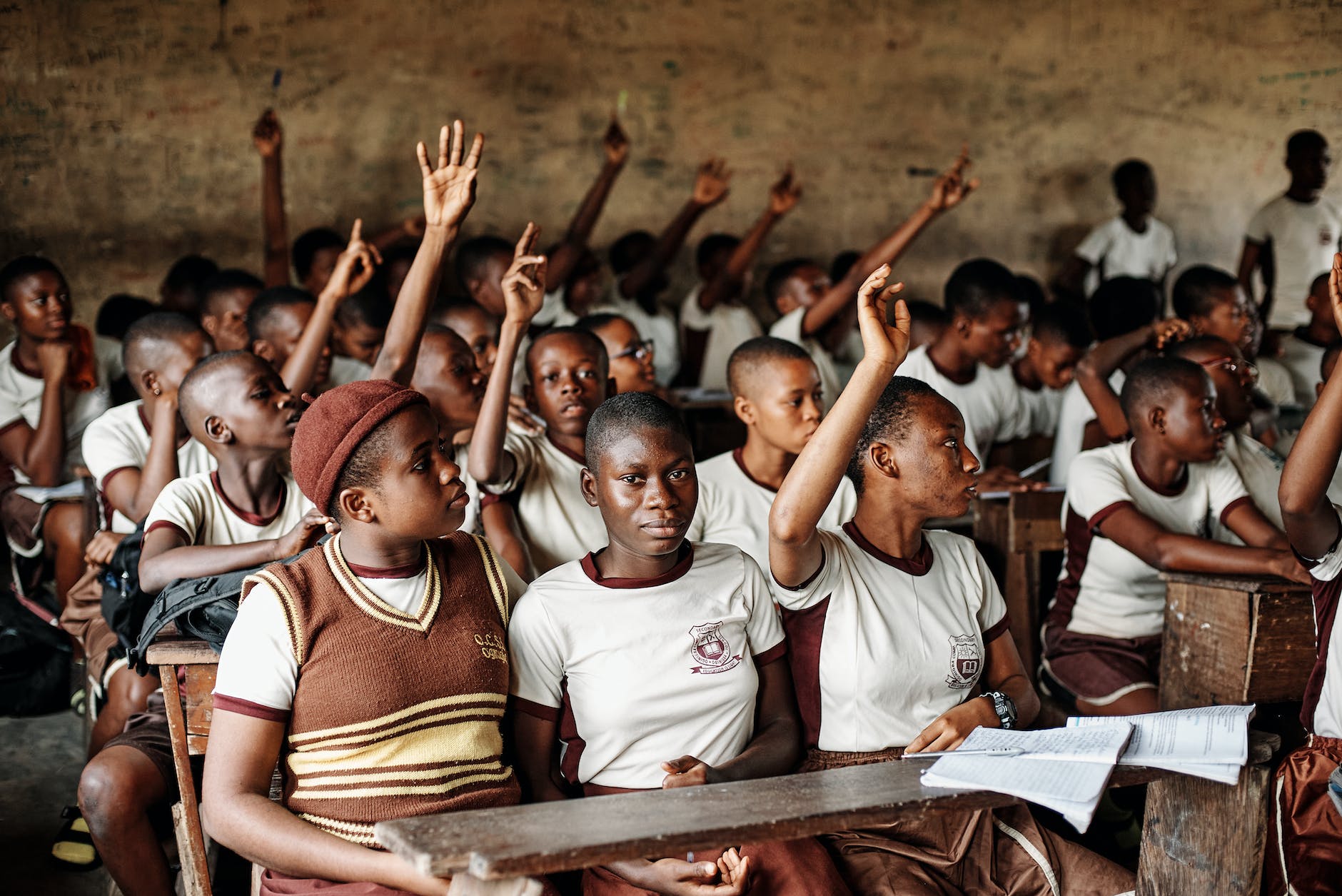
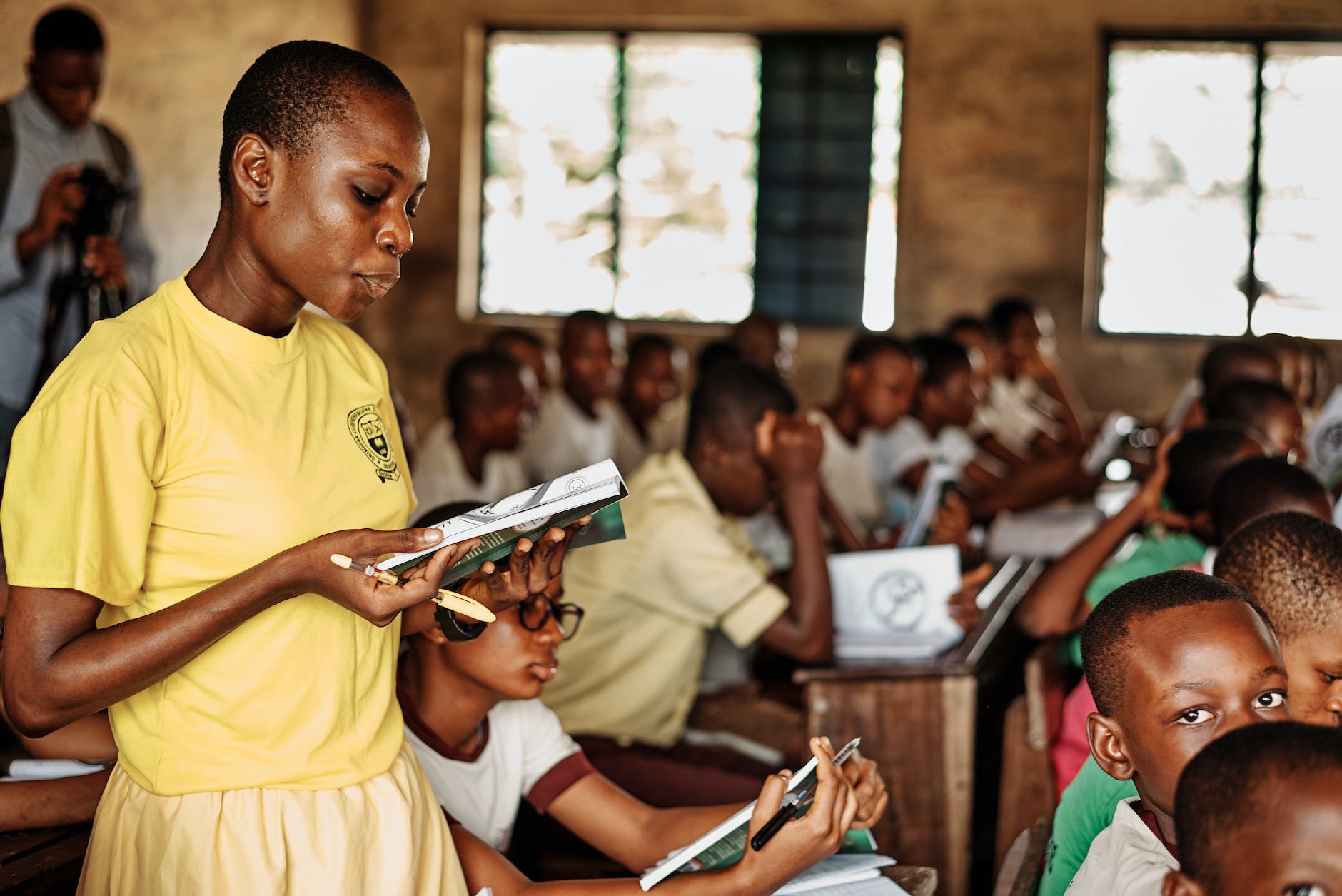
Man is born tabula rasa and, without the help of education, would remain ignorant and unable to navigate life and its vicissitudes. Education remains one of the fundamental rights of humans. It is so essential that some countries ( Germany, Finland, Ireland, and Sweden) provide free education and others (Denmark, Norway, Iceland, and the Czech Republic) offer subsidized tuition at different levels (Business Insider September 19, 2019).
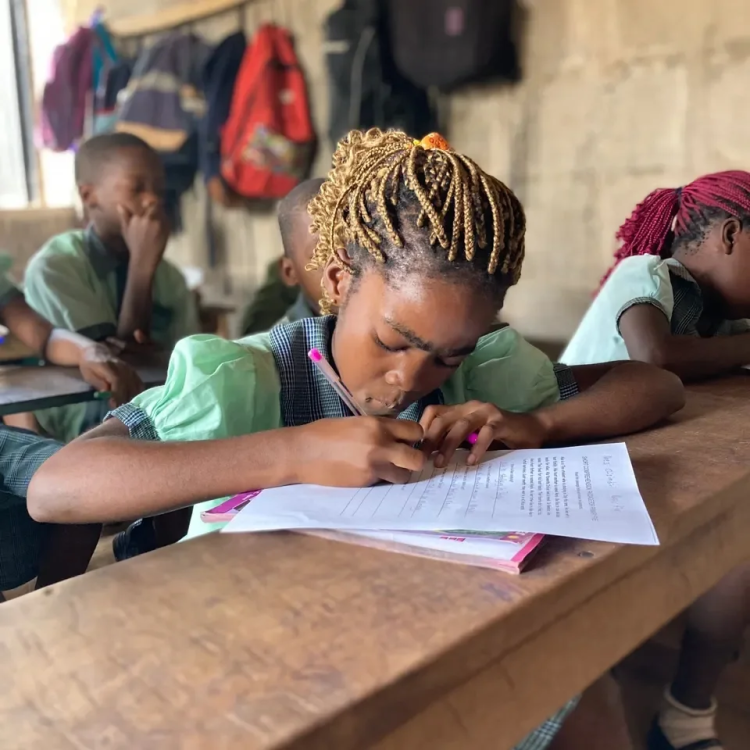
Britannica defines Education as “the transmission of the values and accumulated knowledge of a society.” While the Cambridge dictionary defines it as “the process of teaching or learning, especially in a school or college, or the knowledge you get from this.” Whatever definition one may choose to go by, the point is that education involves the transfer of knowledge.
Education may be formal or informal. It is formal education if it occurs in structured and official settings like schools or colleges by trained teachers (Througheducation December 15, 2019). It is informal if knowledge is passed down in an unofficial environment, for example, at home or among peers or neighbors. Informal education is not structured as it is often spontaneous and sometimes comes from one’s experiences (Througheducation December 16, 2019).
The Nigerian Universal Basic Education Commission (UBEC) law (UBE Act, 2004) defines Basic as including
“Early childhood care and development education, nine years of formal schooling (6 years of primary and three years of junior secondary education, adult literacy, and non-formal education, skills acquisition programs) and the education of special groups such as nomads and migrants, girl-child and women, almajirai, street children and disabled groups.”
What is the Legal Framework for Basic Education in
Nigeria?
Nigeria is a signatory to many international and regional treaties providing for education, particularly basic education. To this end, she is bound by their provisions. This section discusses these (international and regional) laws and those passed by the Nigerian National Assembly. Together, these laws seek to foreclose activities that may disrupt education in Nigeria.
International Instruments:
Universal Declaration of Human Rights (UDHR) 1948
This declaration provides a foundation upon which human rights are legislated. Article 26 provides for the right of everyone to Education. It is reproduced below:
- Everyone has the right to education. Education shall be free, at least in the elementary and fundamental stages. Elementary education shall be compulsory. Technical and professional education shall be made generally available and higher education shall be equally accessible to all on the basis of merit.
- Education shall be directed to the full development of the human personality and to the strengthening of respect for human rights and fundamental freedoms. It shall promote understanding, tolerance, and friendship among all nations, racial or religious groups, and shall further the activities of the United Nations for the maintenance of peace.
- Parents have a prior right to choose the kind of education that shall be given to their children.
This means that basic (early) education must be free and compulsory. Although this
instrument is just a declaration and cannot be enforced, its provisions are sound and
should be followed by well-meaning governments.
Convention on the Rights of the Child (CRC) 1989
This is an off-shoot from the United Nations Declaration of the Rights of the Child in 1959 which itself drew from the 1924 Geneva Declaration on the Rights of the Child that first gave recognition to Children as recipients of welfare after the first World War. In 1991, Nigeria ratified the CRC and domesticated it 12 years later in 2003. In Article 28, the CRC provides that every child has a right to be educated and that primary education should be free, while secondary education should be available. It further requires that every child be encouraged to attain the highest level of education.
Regional Instruments:
African Charter on Human and Peoples’ Rights 1981
This Charter recognizes and provides for Economic, Social, and Cultural rights, as well as Civil and Political rights in Africa. Nigeria ratified it in 1983 and is thus bound by its provisions. Article 17 (1) provides for the right of everyone to education, thus state parties (including Nigeria) must ensure that everyone has access to education.
Following this provision, the African Commission on Human and Peoples’ rights in its 346th Resolution on the Right to Education in Africa – ACHPR/Res.346(LVIII) 2016 urged States Parties to guarantee the full scope of the right to education, including, the opportunity for all children to enjoy free and compulsory primary education without discrimination and providing pre-school, primary, secondary, tertiary, adult education and vocational training to all citizens.
African Charter on the Rights and Welfare of the Child
This Charter provides for the right to education of children in the territories of State Parties. It is applicable in Nigeria as it has been adopted through the Nigerian Child Rights Act of 2003. Article 11(3) of the Charter provides that State Parties shall take all appropriate measures to protect the right of children to education by providing among other things, free and compulsory basic education.
African Youth Charter 2006
It was developed in 2006 by the African Union as a rights-based policy framework to guide Member States in caring for young persons (aged 15 to 35) within their territories (This Day February 17, 2010). Although adopted on July 2, 2006, it did not come into force until August 9, 2009. It was adopted by leaders of various African States in Banjul, Gambia.
Article 13(4)(a) of this Charter enjoins State Parties to “provide free and compulsory basic education and take steps to minimize the indirect costs of education.”
National Laws:
1999 Constitution of the Federal Republic of Nigeria (CFRN) (as amended)
This is the grundnorm, the fons et origo of all laws in Nigeria. It is the foundation upon which other laws stand and any law inconsistent with its provisions stands null to the extent of that inconsistency (Section 1(3), CFRN 1999).
The Constitution provides for free, compulsory, and universal primary education in Section 18. Section 18 is under Chapter 2 of the Constitution and all provisions within this Chapter are termed non-justiciable. What this means is that even where the government fails to live up to the letters of Section 18, no citizen can rightly sue the government on this basis.
Child Rights Act (CRA) 2003
The adoption of this act gave legal backing (in Nigeria) to the United Nations Convention on the Rights of the Child and the African Charter on the Rights and Welfare of the Child.
As interesting as this law is, it is only applicable in 23 out of the 36 states of the Federation because the other 13 States are yet to ratify it (National Human Rights Commission).
Compulsory Free Universal Basic Education Act (The UBE Act) 2004
This Act does not just provide for free and compulsory basic education, it also defines basic education as reproduced earlier. It is the major National Law on Basic Education in Nigeria, as it was passed for that purpose and other incidental reasons.
It seeks to provide basic education from basic 1 to basic 9 for children aged 6 to 16 years of age (Uko-Aviomoh, Okoh, and Omatseye, 2007).
IN CONCLUSION,
Education is a vital requirement for survival in society. It should be free and compulsory and made available by the State. Although the Nigerian Constitution makes it non-justiciable, citizens can enforce the right to Education by seeking the implementation of other National Laws, as well as the international and regional instruments to which Nigeria is a signatory. Nigerians can also sue based on the provisions of the various Acts of the National Assembly providing for education in Nigeria as discussed above.
It is also important for citizens to understand the importance of education in order to fully appreciate its existence and demand its availability in good quality.
© Glory Ifezue Foundation, 2024.
 GLORY IFEZUE FOUNDATION FOR WOMEN AND YOUTH INITIATIVE
Leave a comment